




Trigger Conditions for Replacing HEPA Filters in Clean Areas of Pharmaceutical Workshops
The following are common trigger scenarios for replacing HEPA filters:
Based on Resistance Change Reaching Final Resistance
- When the final resistance of a HEPA filter reaches twice the initial resistance, replacement is usually required. For example, if the initial resistance of a HEPA filter is 160Pa, replacement should be considered when the resistance reaches approximately 320Pa.
- Rapid resistance increase: If the resistance of a HEPA filter rises sharply in a short period of time, even if it has not reached twice the initial resistance, it may indicate that the filter is severely clogged or damaged and needs to be replaced in advance.
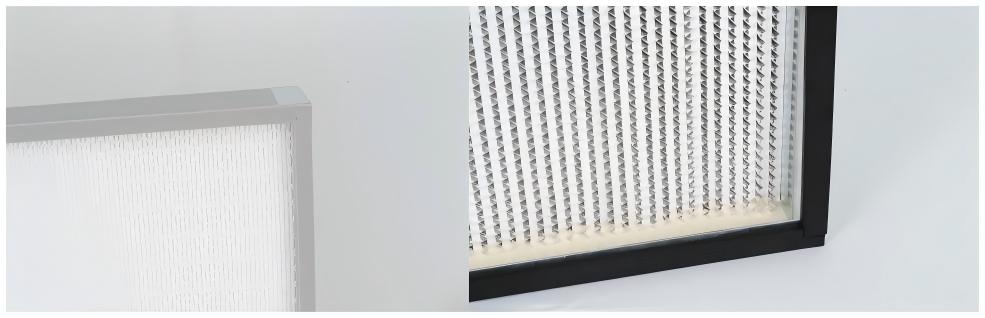 Based on Changes in Air Volume/Air Velocity and Air Exchange Rate
- Air volume decrease: Generally, when the air volume of a HEPA filter drops to 75% of the rated air volume, replacement needs to be considered. For instance, if the rated air volume of a HEPA filter is 1000m³/h, replacement should be considered when the actual air volume falls below 750m³/h.
- Abnormal air exchange rate/pressure difference: When the air exchange rate or pressure difference is abnormal and cannot be corrected by adjusting the supply/return air valves, the HEPA filters at the air outlets with abnormal air volume need to be replaced.
- Abnormal air velocity: For example, in Grade A areas, if the air velocity is lower than 0.36m/s, the HEPA filter must be replaced.
Based on Operating Environment
- High dust-generating environments: In areas with high levels of dust and particulate matter (e.g., weighing, batching, and dispensing areas), HEPA filters may need to be replaced annually or even more frequently.
- Low-pollution environments: In relatively clean environments such as hospital operating rooms and biosafety laboratories, the replacement cycle of HEPA filters may be longer, generally 2-3 years. However, if the laboratory conducts experiments that generate significant pollutants, early replacement may be required.
Based on Test Results
- Leakage test: Leakage tests are performed every 6 months for Grade A/B clean areas and every 12 months for Grade C/D clean areas. If the leakage test fails, the HEPA filter must be replaced promptly.
Periodic Replacement
Due to variations in manufacturers, processes, and on-site operating conditions, there is no uniform standard for the replacement cycle. A reliable replacement cycle can be determined by analyzing historical installation and test data (e.g., the time from installation to PAO leakage test failure or pressure difference exceeding twice the initial resistance) of filters from a specific manufacturer under different operating conditions (e.g., Grade A, B, C, D areas) and incorporating an appropriate safety margin.
Want to learn more information about filters, just contact us!