



How to Select FFU for Semiconductor Cleanroom?
In semiconductor manufacturing, even a single airborne particle can ruin an entire wafer, leading to massive yield loss. Fan Filter Units (FFUs) are the core equipment that maintains ISO Class 3 to 5 cleanroom environments by providing continuous unidirectional airflow. Unlike general cleanrooms, semiconductor fabs demand ultra-low vibration, chemical corrosion resistance, and extremely high filter efficiency — typically H13 to H15 or even ULPA grades. Therefore, selecting the right FFU is not just about air cleanliness; it directly impacts production stability and operating costs.
The Typical Application Scenarios of FFU in Semiconductor Factories
FFUs are deployed throughout key semiconductor production areas, including photolithography, etching, diffusion, thin-film deposition, and CMP (chemical mechanical polishing). Among these, photolithography areas have the most stringent requirements, often demanding ISO Class 3 or even higher cleanliness levels, along with extremely stable airflow velocity — usually between 0.35 m/s and 0.45 m/s. In etching and diffusion zones, chemical corrosion resistance becomes critical, so FFU casings and fans often require special anti-corrosion coatings. Additionally, in wafer handling and inspection zones, low noise and low vibration are essential to avoid interfering with precision instruments.
Five Core Elements for Selecting a Semiconductor FFU
When selecting an FFU for semiconductor applications, five technical factors must be prioritized.
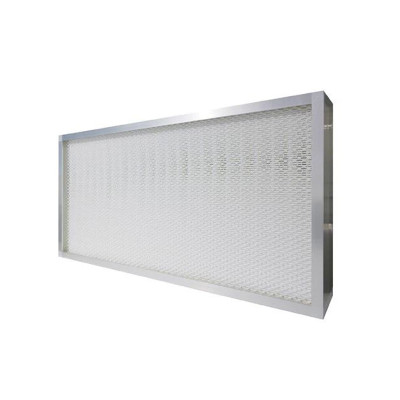
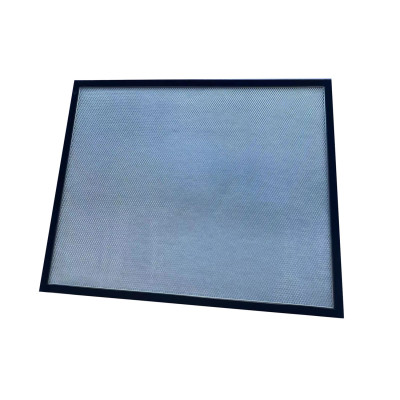
First is filter efficiency and grade, where H14 or U15 grade is common for advanced nodes, with an MPPS efficiency of 99.995% or higher.
Second is motor type — EC motors are now the industry standard due to their superior energy efficiency, precise speed control, and lower heat generation.
Third is chemical resistance: standard anodized aluminum may not suffice for aggressive processes; stainless steel or epoxy-coated casings are often required.
Fourth is vibration control, as even micro-vibrations can disrupt lithography tools.
Finally, control system integration — modern fabs demand FFUs that support Modbus, BACnet, or other protocols for centralized monitoring and predictive maintenance.
The Importance of Energy Conservation and Life Cycle Cost
Semiconductor fabs operate 24/7, and FFUs can account for 30% to 50% of total cleanroom energy consumption. Therefore, energy efficiency is no longer optional. High-efficiency EC motors combined with low-resistance filter media can reduce annual power consumption by 30% or more compared to traditional AC-based systems. Additionally, adopting a variable speed control strategy — where FFUs automatically adjust airflow based on real-time pressure differential — further cuts energy waste.
From a total cost of ownership (TCO) perspective, a slightly higher upfront investment in energy-efficient FFUs often pays back within 12 to 24 months through electricity savings alone, not to mention reduced maintenance costs and longer filter life.
Common Selection Mistakes and How to Avoid Them
A common mistake in semiconductor FFU selection is focusing solely on initial purchase price while ignoring long-term reliability and energy costs. Another frequent error is choosing a filter grade that is either insufficient (e.g., H13 for an advanced node lithography area) or unnecessarily over-specified (e.g., U17 for non-critical areas), both leading to either yield risks or wasted capital. Additionally, some buyers overlook vibration and noise specifications, which can later cause tool interference or operator discomfort. To avoid these pitfalls, always request performance curves (airflow vs. static pressure), third-party test reports (e.g., MPPS efficiency, vibration levels), and case studies from similar semiconductor fabs before making a decision.
Selecting the right FFU for semiconductor cleanrooms is a strategic decision that directly affects yield, energy cost, and equipment uptime. By prioritizing filter efficiency (H14 or above), EC motor technology, chemical resistance, vibration control, and smart system integration, you ensure that your cleanroom not only meets current production requirements but is also prepared for future technology nodes. If you are planning a new semiconductor fab or upgrading an existing facility, we offer customized FFU solutions with full performance documentation and on-site technical support. Contact us today to discuss your project specifications or request a detailed quotation!