



How Does Honeycomb Activated Carbon Filter Work?
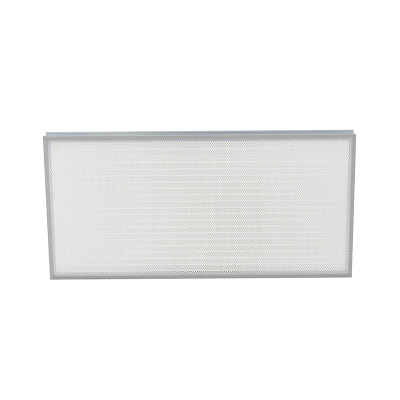
A honeycomb activated carbon panel filter is a flat, rigid air filtration device consisting of a honeycomb-structured substrate (aluminum, paper, or plastic) filled with high-activity activated carbon granules. The honeycomb channels run straight through the filter thickness, allowing air to pass through while maximizing contact with the carbon media.
This design is widely used in HVAC systems, air purifiers, and industrial ventilation to remove gaseous contaminants such as VOCs (volatile organic compounds), formaldehyde, odors, and chemical fumes.
The Adsorption Principle of Activated Carbon
Activated carbon removes gaseous contaminants through two primary mechanisms:
1.Physical Adsorption
Relies on van der Waals forces to trap gas molecules within the carbon's porous structure
Reversible process – molecules can be released under certain conditions (heat, pressure change)
Effective for most organic vapors and VOCs
2.Chemical Adsorption (Chemisorption)
Involves chemical reactions between the gas molecules and functional groups on the carbon surface
Irreversible process – contaminants are permanently bound
Enhanced through impregnation (adding chemicals to target specific gases like ammonia or acid gases)
Key Factors Affecting Adsorption:
Temperature: Lower temperatures improve adsorption capacity
Humidity: High humidity (above 70-80%) can compete for pore space
Contact time: Longer contact time (lower face velocity) improves removal efficiency
Pore structure: Micropores (<2nm) capture small molecules; mesopores (2-50nm) capture larger VOCs
Interpretation of Key Performance Indicators
Understanding activated carbon performance requires familiarity with several key metrics:
| Metric | Full Name | Typical Range | What It Measures |
|---|---|---|---|
| Iodine Value | Iodine Adsorption Number | 600 – 1200 mg/g | Micropore volume; effectiveness for small molecules (<1nm) |
| CTC Value | Carbon Tetrachloride Activity | 40% – 80% | Total pore volume; effectiveness for medium-sized VOCs |
| Benzene Adsorption | Benzene Adsorption Rate | 30% – 45% | Specific performance against aromatic hydrocarbons |
| Formaldehyde Removal | — | ≥90% | Real-world performance for common indoor pollutant |
| Apparent Density | Bulk Density | 0.35 – 0.55 g/cm³ | Carbon weight per volume; affects pressure drop |
| Hardness | Abrasion Resistance | ≥90% | Resistance to dust generation during use |
How to Interpret These Values:
High iodine value (≥900): Best for low molecular weight VOCs, good for general purpose
High CTC value (≥60): Better for larger organic molecules, longer service life
Balance is key: The highest value isn't always best – match the metric to your specific contaminants
Comparison of Different Substrates
The honeycomb substrate material significantly affects filter performance, cost, and application suitability:
| Substrate | Strength | Humidity Resistance | Temperature Resistance | Cost | Typical Applications |
|---|---|---|---|---|---|
| Aluminum | Very High | Excellent | Up to 200°C | High | Industrial, high-temp, cleanrooms |
| Paper | Low | Poor (swells above 70% RH) | Up to 60°C | Low | Residential, commercial HVAC |
| Plastic (PP/ABS) | Medium | Good | Up to 80°C | Medium | Humid environments, general purpose |
Selection Guide:
-Choose aluminum honeycomb when: Operating temperature exceeds 80°C, High mechanical strength is required, Filter will be cleaned and reused, Application is industrial or semiconductor
-Choose paper honeycomb when: Low cost is the top priority, Environment is dry (<60% RH), Filter is disposable, short-term use, Application is residential or light commercial
-Choose plastic honeycomb when: Humidity is consistently high (70-95% RH), Moderate strength and cost balance is needed, Chemical resistance to certain gases is required
How to Select the Right Model
Selecting the right honeycomb activated carbon panel filter requires considering five key factors:
Step 1: Identify Target Contaminants
What specific gases need removal? (VOCs, formaldehyde, odors, acid gases?)
What is the concentration level? (ppm or mg/m³)
Are multiple contaminants present?
Step 2: Determine Required Efficiency
Is ≥90% removal needed? Or is 70-80% acceptable?
What are the downstream air quality requirements?
Step 3: Calculate Required Carbon Volume
Higher contaminant load → more carbon volume needed
Higher airflow rate → larger filter face area
General rule: For light odor control, 1" thickness; for heavy VOCs, 2" or 4"
Step 4: Choose Frame Material
Galvanized steel: Industrial, high strength, cost-effective
Aluminum: Lightweight, corrosion-resistant, cleanroom use
ABS plastic: Humid environments, general commercial
Paper frame: Low-cost disposable applications
Understanding the technology behind honeycomb activated carbon panel filters is the first step toward cleaner, healthier indoor air.
At SNYLI Environmental Technology (Shandong) Co., Ltd. , we don't just sell filters — we provide solutions. With over 10 years of experience, ISO-certified quality management, and a 20,000+ square meter manufacturing facility, we are equipped to meet your air filtration needs, whether standard or custom.
Ready to improve your air quality?
Contact us today for:
✓ Product specifications and quotes
✓ Custom sizing and media formulation
✓ Technical support and installation guidance
✓ OEM / private label services
Let us help you breathe easier.