




Too High MERV Wastes Energy, Too Low MERV Fails? Your ASHRAE 52.2 Selection Guide
A Common Purchasing Dilemma
Have you ever faced this situation: choosing a higher MERV rating "just to be safe," only to find fan energy consumption skyrocketing and electricity bills climbing month after month? Or trying to save money with a lower MERV rating, only to discover workshop dust levels still exceeding limits and cleanroom tests failing?
This is not your fault – it's a flaw in the selection logic itself.
What Exactly is MERV?
MERV (Minimum Efficiency Reporting Value) is the filter rating system defined in the US ASHRAE 52.2 standard, ranging from 1 to 16. The higher the number, the stronger the filter's capture capability for particles between 0.3 and 10 micrometers.
The Two Costs of Choosing the Wrong MERV
Cost 1: Too High – Energy Consumption Soars
Higher MERV means denser filter media, which also means higher initial resistance. For every 100Pa increase in resistance, fan energy consumption rises by approximately 10-15%. In a 10,000 CFM system, choosing a MERV rating just two levels too high could cost thousands of yuan in additional electricity bills every year.
Cost 2: Too Low – Filtration Fails
If the MERV rating is too low, the filter cannot effectively capture target particles. For pharmaceutical workshops requiring 99.97% removal of particles above 0.3 microns, using MERV 13 (approximately 85% efficiency) simply won't meet the requirement. The consequences: failed cleanroom tests, compromised product quality, and even regulatory penalties.
How to Scientifically Choose the Right MERV Rating?
Step 1: Identify Target Particles
Type of pollutant | Typical particle size | Recommend MERV |
|---|---|---|
| Pollen, dust | >10μm | MERV 5-8 |
| Mold spores | 3-10μm | MERV 8-11 |
| Bacteria | 0.5-3μm | MERV 11-14 |
| Tobacco smoke | 0.1-0.5μm | MERV 14-16 / HEPA |
Step 2: Consider System Resistance Budget
Every HVAC system has a fan static pressure limit. When selecting filters, ensure that the total initial resistance of primary + medium + HEPA filters does not exceed 70% of the available fan static pressure, leaving 30% margin for resistance increase after dust loading.
Step 3: Evaluate Total Lifecycle Cost
Total Lifecycle Cost = Purchase Cost + Energy Cost + Labor Cost for Replacement
A cheap filter with high resistance may seem cost-effective, but its annual electricity cost could be several times its purchase price. Conversely, a slightly more expensive but low-resistance filter is often more economical in the long run.
How SNYLI Helps You Solve the Selection Problem?
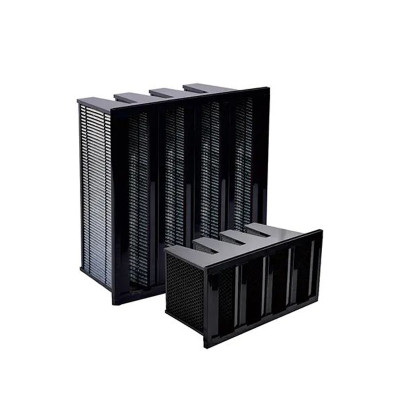
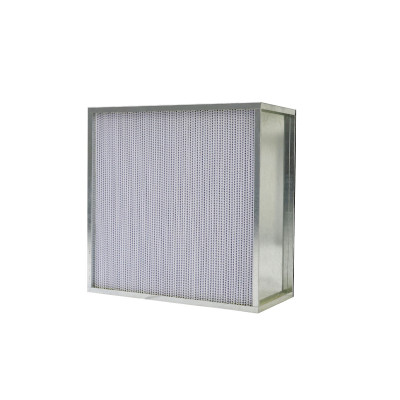
The SNYLI air filter product series is meticulously designed to meet ASHRAE 52.2 standards, covering the full range from MERV 1 to MERV 16, helping you achieve precise matching without wasting a single dollar.
Our Advantages:
Low-resistance design – 15-20% lower resistance than industry average at the same MERV rating, significantly reducing energy consumption
High dust-holding capacity – Extended replacement cycles, reducing labor and maintenance costs
Full coverage – From MERV 1 primary to MERV 16 sub-HEPA, one-stop shopping
Multi-standard compliance – Meets ASHRAE 52.2, ISO 16890, GB/T 14295 and more
Choosing the right MERV rating is not about "higher is better" or "cheaper is better" – it's about just right. Too high wastes energy; too low is as good as not installing one. SNYLI is here as your professional selection partner, helping you spend every dollar wisely.