




How to Select the Right Mini Pleat HEPA Filters for Your Specific Environment
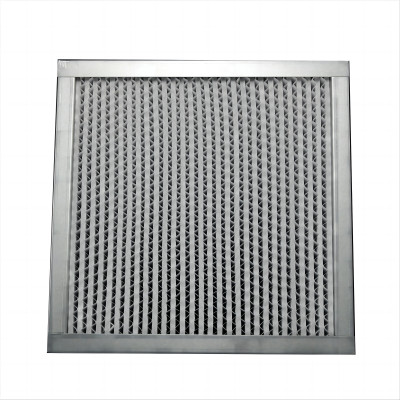
Mini Pleat Hepa Filters are one of the core components of modern clean technology, primarily used to capture ultrafine particles ranging from 0.1 to 0.3 micrometers (µm). They serve as the final high-efficiency filtration devices in various cleanrooms and ventilation systems. With their compact structure, excellent performance, and high cost-effectiveness, they are widely used in fields with stringent air cleanliness requirements, such as electronics, semiconductors, pharmaceuticals, biotechnology, food, and healthcare.
Application Scenarios of Mini pleat panel Filters
As the "gatekeepers" of clean environments, Mini pleat panel Filters have permeated all fields that demand high air quality.
1. Electronics and Semiconductor Industry
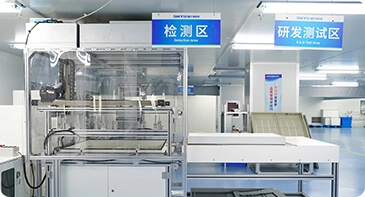
Scenarios: Semiconductor chip manufacturing workshops, TFT-LCD production lines, cleanrooms for precision circuit boards (PCBs), and data center server rooms.
Function: They remove even the smallest airborne particles to prevent dust from settling on precision circuits, which could cause short circuits, line width defects, or signal interference, thus ensuring a high yield of products.
2. Biopharmaceutical and Medical Fields
Scenarios: Aseptic filling workshops in pharmaceutical factories, biosafety laboratories, clean operating rooms in hospitals, sterile preparation rooms, bone marrow transplant wards, and animal research facilities (ABSL).
Function: They effectively filter out microbial carriers such as bacteria and viruses, ensuring a sterile state during drug production, protecting healthcare workers and patients, and preventing cross-contamination and biological hazards.
3. Food and Beverage Industry
Scenarios: Aseptic filling workshops for products like milk powder, yogurt, beer, and juice, as well as health food production workshops.
Function: They inhibit the proliferation of microorganisms in the air, prevent product contamination, extend shelf life, and ensure food hygiene and safety.
4. Research Institutions
Scenarios: Micro-nano processing laboratories, new materials laboratories, life sciences laboratories, and precision measurement laboratories in universities.
Function: They provide a stable, ultra-clean environment for high-precision experiments, avoiding external contamination that could interfere with results.
5. Other High-Demand Fields
Scenarios: Cleanrooms in aerospace (e.g., satellite assembly), sterile production workshops for high-end cosmetics, hospital ICUs, and hemodialysis centers.
Key Factors Affecting the Performance of Mini Pleat Air Filters
The performance of filters is not static; it is profoundly influenced by the following key factors:
1.Filter Material Quality
Core: The performance of ultra-fine glass fiber filter paper or PTFE is fundamental. The fiber diameter, uniformity, strength of the filter paper, and the porosity of the PTFE membrane directly determine filtration efficiency, resistance, and durability.
2. Structural Design and Adhesives
Pleat Height and Spacing: A reasonable pleat design maximizes the filtration area within a limited space, reduces airflow velocity, thereby lowering initial resistance and increasing dust-holding capacity.
Hot Melt Adhesive: The type of adhesive, application amount, and curing process determine the stability of the filter structure. Poor-quality adhesives may crack under temperature and humidity changes, leading to filter collapse or leakage.
3.Frame and Sealing Technology
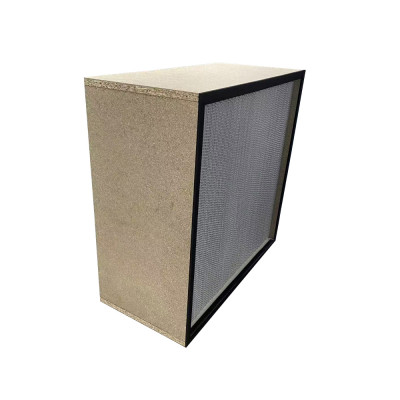
Frame Material: Materials like aluminum alloy and stainless steel affect strength, corrosion resistance, and installation stability.
How to Choose the Mini Pleat Hepa Panel Filter Based on Your Needs
Selecting the appropriate filter is a systematic project. Please follow these steps:
1. Step One: Define Cleanliness Level Requirements
Determine the required cleanroom level based on your industry standards (e.g., ISO 14644-1, GMP) (e.g., ISO Class 5/100, ISO Class 7/10,000). This directly dictates the minimum efficiency level required for the filter (e.g., H13 or H14).
2. Step Two: Confirm Key Performance Parameters
Efficiency Level: Match your cleanliness requirements; typically, terminal HEPA filters need to be at least H13 (with ≥99.95% efficiency for 0.3µm particles).
Rated Airflow: The rated airflow of the selected filter must match the airflow designed for your ventilation system; avoid "underpowered" solutions.
Initial Resistance: Choose products with lower initial resistance while meeting efficiency requirements to help reduce system energy consumption.
Dust-Holding Capacity: In environments with high dust concentrations or when aiming to extend replacement cycles, select products with higher dust-holding capacity.
3. Step Three: Consider Environmental and Medium Characteristics
Temperature and Humidity: In high-temperature and high-humidity environments, choose products with stronger weather resistance and consult suppliers about the suitability of adhesives and sealing materials.
Corrosion Resistance: If the air contains chemical pollutants, select corrosion-resistant frames (e.g., stainless steel frames) and sealing materials.
Mold Resistance: In humid environments such as biopharmaceuticals and food, consider filter materials with mold-resistant properties.
4. Step Four: Pay Attention to Installation Details and Costs
Size and Installation Method: Accurately measure the dimensions of the installation slot and confirm the installation method of the filter (e.g., compression method, knife-edge method).
Brand and Supplier: Choose reputable brands and suppliers with strong technical capabilities to ensure stable product quality and after-sales support. SNYLI guarantees that every product it provides meets high standards and offers high-quality after-sales consultation services.
Comprehensive Cost: Consider not only procurement costs but also lifecycle costs, including operational energy consumption (impact of resistance) and replacement frequency.
Sealing Method: Options include polyurethane potting, gel sealing strips, rubber gaskets, etc. The integrity of the seal is crucial to prevent unfiltered air from leaking through the frame; once leakage occurs, efficiency drops to zero.
Common Questions About Mini Pleat Hepa Filters
Q1: What is the difference between Mini pleat and Deep pleat hepa filters? How do I choose?
A: The core difference lies in the method of separating filter materials (hot melt adhesive vs. aluminum foil) and structural strength.
Mini pleat: Advantages include lightweight, compact size, larger filtration area for the same dimensions, lower resistance, and high cost-effectiveness, making it the preferred choice for most cleanrooms.
Deep pleat: Advantages include higher structural strength, better performance under high airflow, high temperature, and humidity, and greater stability, often used in high-temperature requirements or special conditions with significant airflow fluctuations.
Q2: Can mini pleat hepa panel filters be cleaned or reused?
A: Absolutely not. Mini pleat hepa panel filters are single-use products. The particles captured by the filter material cannot be removed through cleaning, and forced cleaning will damage the filter structure, leading to complete failure. Any claims of "washable" HEPA filters are unprofessional.
Q3: How can I determine when a filter needs to be replaced?
A: The main indicators include:
Final Resistance Reaching Set Value: When the filter's resistance (differential pressure) reaches twice the initial resistance, it is the conventional replacement point.
Significant Decrease in Airflow or Air Velocity: This affects the air exchange rate in the cleanroom.
Exceeding Downstream Particle Count: Use a particle counter to detect a significant increase in outlet concentration.
Visual Inspection or Usage Duration: Repeatedly finding irreparable leaks during regular leak tests or reaching the recommended service life.
Q4: Why is a "DOP/PAO leak test" necessary after installation?
- A: This test is to confirm:
- The filter itself has no manufacturing defects.
- The filter was not damaged during transport and installation.
- The seal between the filter and installation frame is tight.
- Leak testing is a necessary and critical step to ensure that the air quality in the cleanroom meets design standards.
Conclusion
Mini pleat hepa filters are indispensable core components of modern clean technology. Their selection and application are not merely procurement actions but require a comprehensive consideration of application scenarios, performance parameters, environmental factors, and cost-effectiveness.
Correct selection and maintenance not only ensure that your clean environment consistently meets standards but also save energy by reducing operational resistance and minimize waste by extending service life, ultimately achieving a balance of safety, efficiency, and economy. Therefore, it is recommended to engage in in-depth communication with professional and reliable technical suppliers during the selection and procurement process to ensure that each filter you choose can be fully utilized, providing the strongest support for your core production or research activities.