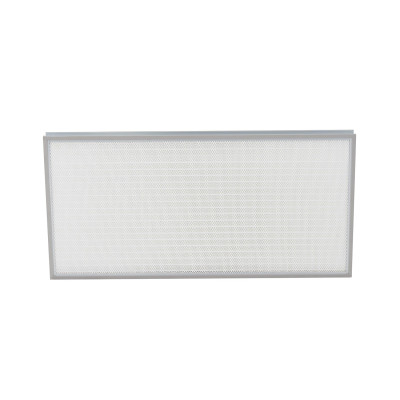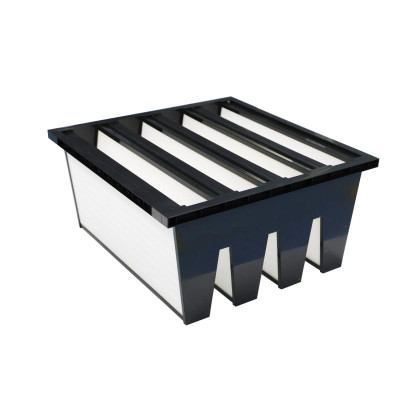





Mini Pleat HEPA Filter's Path of Development
As the global concern for air quality continues to rise, and the demand for high efficiency filtration in industrial cleanrooms, medical and pharmaceutical, electronic manufacturing and other fields is surging, mini pleat HEPA filter is becoming a new favourite in the environmental protection industry.
Technological breakthrough: from structural optimisation to material innovation
The traditional deep pleat HEPA filter has the disadvantages of high weight and easy to accumulate dust due to the aluminium separator structure, whereas the mini pleat design not only reduces the weight by more than 30% by adopting hot melt adhesive instead of the metal separator, but also improves the filtration efficiency by increasing the effective filtering area of the filter media.
Broadening of application scenarios: from industrial to residential
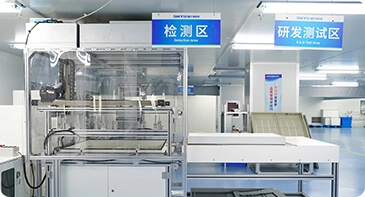
In the past, mini pleat hepa filters were mainly used in semiconductor factories, biological laboratories and other high-standard places. Nowadays, with the awakening of public health awareness, the demand has rapidly penetrated into the commercial and residential sectors, and the medical industry has become a growth engine. Mini pleat HEPA filters can effectively control microbial contamination in operating theatres.
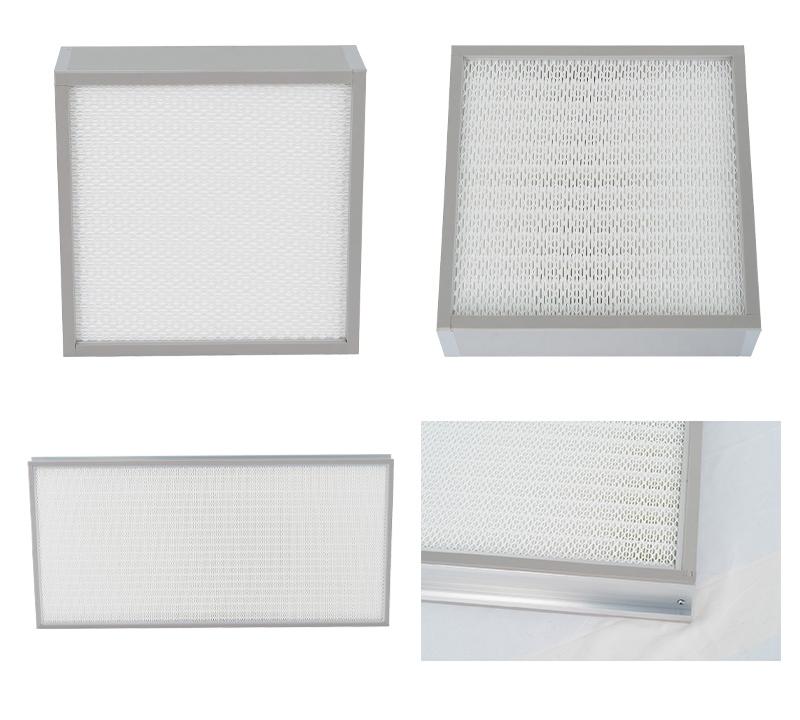
Summary of the advantages and characteristics of mini pleat HEPA filter:
I. Core Advantages
1. Higher filtration efficiency
The filtration efficiency of 0.3μm particles can reach 99.97% (H13 grade) to 99.995%(H14 grade) , filtration efficiencies of 99.9995% (U15 class) to 99.99995% (U16 class) for 0.12 μm particles, which is suitable for clean environments (e.g., chip factories, operating rooms).
Adopt electrostatic electret technology to enhance the adsorption capacity of tiny particles and improve the filtration precision.
2. Lower air resistance (pressure drop)
The mini pleat design reduces air resistance and the initial pressure drop is usually 15-30% lower than deep pleat filter, which reduces fan energy consumption and extends equipment life.
3. Larger effective filtration area
After cancelling the metal separator, the folding density of the filter material is higher, the filtration area increases by 20%-30% under the same volume, the dust holding capacity is improved, and the service life is longer.
4. Lightweight and compact design
Weight reduction of more than 30%, easy to install and maintain, especially suitable for high-rise buildings, cleanroom ceilings and other space-constrained scenarios.
5. Environmental protection and cost optimisation
No metal separator, reduce material waste, part of the product adopts recyclable filter material (such as PTFE coated filter paper), in line with the trend of green manufacturing.
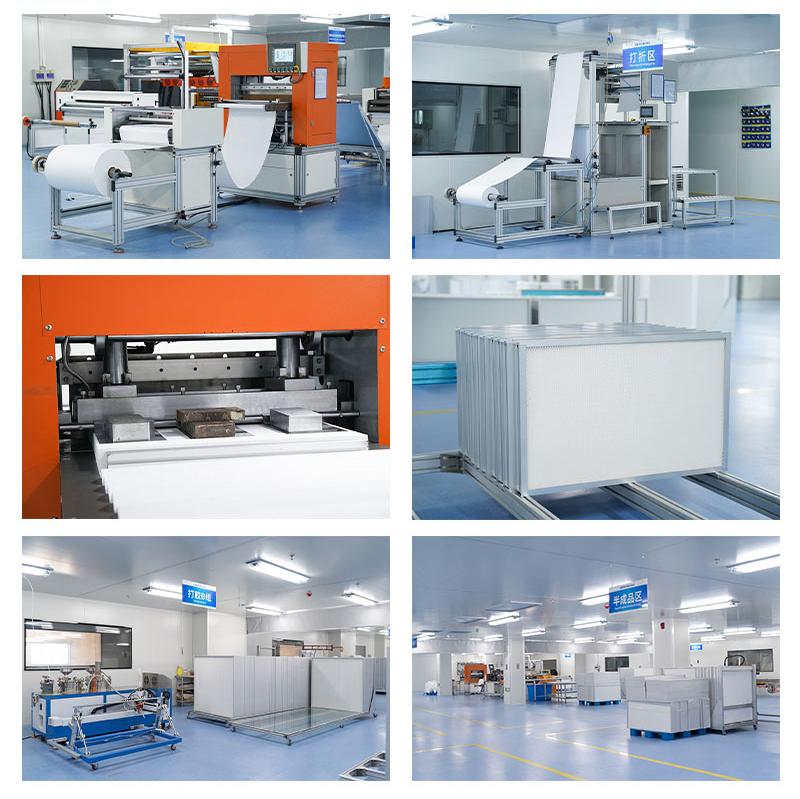
II. Key Features
Structural features
No metal separator: hot melt adhesive is used instead of aluminium separator to avoid metal corrosion and dust accumulation problems.
Integral sealing: The side frame is sealed with polyurethane or rubber to prevent side leakage and ensure filtration stability.
Application Flexibility
Different sizes and efficiency levels (H11-H14, U15-U17) can be customised to meet diverse needs.
III. Applicable Scenarios
Industry: semiconductor, liquid crystal panel factory, precision instrument workshop.
Medical: operating room, sterile laboratory, pharmaceutical GMP workshop.
Commercial: data centres, airports, high-end office building fresh air system.
Civilian: household air purifier, fresh air system.
Summary
With the advantages of high efficiency, low resistance, light weight and environmental protection, mini pleat HEPA filters are gradually replacing deep pleat hepa filters and becoming the first choice in the field of air purification. In the future, with the application of new materials (e.g. nano-fibre) and intelligent (e.g. IoT monitoring) technologies, its performance and market penetration are expected to be further improved.